 FLASHLOOK.AI
Beyond the Sample Size: Why Plus-Size On-Model Photography is a Game-Changer
Discover how AI-powered plus-size on-model photography is transforming the fashion industry, boosting conversion, and reducing returns by offering truly inclusive visuals without the prohibitive costs of traditional photoshoots.

In the dynamic world of fashion e-commerce, the adage "seeing is believing" holds immense power. For decades, the industry has grappled with a significant challenge: how to showcase clothing on a diverse range of body types when traditional photography budgets and logistics make it nearly impossible. This challenge is particularly acute when it comes to plus size on-model photography, a category that represents a massive market yet remains chronically underserved by conventional imagery.
Today, a revolutionary shift is underway, powered by artificial intelligence. Flashlook is at the forefront, enabling brands to move beyond the limitations of single sample-size models to embrace truly [size inclusive fashion photos] that resonate with every customer, boosting engagement, conversion, and loyalty.
The Persistent Problem: Inclusive Sizing, Exclusive Imagery
Many fashion brands have, commendably, expanded their size ranges to include everything from XS to 5XL and beyond. This commitment to inclusive sizing is a positive step, reflecting the reality that a significant portion of the population, for instance, nearly two-thirds of American women, wear a size 14 or larger. However, the operational reality of traditional fashion photography often undermines this progress.
Imagine a brand with a 200-SKU catalog and a size range that spans 30 sizes. To photograph every garment on every relevant body archetype-petite, average, curve, plus, and extended plus-would mean multiplying shoot costs by five to seven times per garment. This quickly becomes economically unfeasible. The result? An extended size range in stores, but a catalog that still predominantly features a single body type, typically a sample size. This disconnect sends a confusing signal to customers, forcing them to mentally translate how a garment might look on their own body, leading to hesitation, lower conversion rates, and ultimately, higher return rates.
Traditional photography faces several compounding factors that make comprehensive [inclusive sizing imagery] difficult:
- Limited Casting Pools: The availability of diverse models, especially across various plus-size categories, remains a challenge for many agencies.
- Prohibitive Shoot Day Economics: Each additional body type requires more model bookings, fittings, wardrobe cycles, and studio time, escalating costs dramatically.
- Garment Sample Availability: Obtaining production samples across an entire size range for a photoshoot often involves longer lead times and logistical complexities.
- Specialized Photography Skills: Photographers proficient in lighting and posing for a wide array of body types are a specialized commodity.
This operational dilemma has historically prevented brands from fully realizing their inclusive ambitions. The budget for studio days often wins out over the desire for diverse representation.
AI: The Game-Changer for Plus-Size On-Model Photography
Artificial intelligence fundamentally inverts these constraints. What was once a costly, time-consuming, and logistically complex endeavor-producing diverse on-model imagery-now becomes a streamlined, scalable process. With AI, the marginal cost of showing a garment on a different body type plummets from an entire separate photoshoot to a credit cycle on a platform like Flashlook.
This shift means brands can finally ship imagery that truly matches the size range they sell. Every garment can be displayed on every body type in the catalog, on product detail pages (PDPs), in email campaigns, and across all advertising channels.
Overcoming Generic AI Limitations
It's crucial to distinguish between generic AI image generators and specialized fashion-trained AI platforms. Generic tools, often trained on web-scraped data heavily biased towards slim bodies, frequently produce caricatured or inaccurate representations of plus-size bodies. These outputs can feature disproportionate features, incorrect fabric drape, and stiff body language-issues that plus-size shoppers immediately recognize and reject. This can, in fact, be worse than no representation at all, potentially creating a PR problem for brands.
Flashlook's approach, like other leading fashion-trained AI, is built on intentionally diverse body data and sophisticated algorithms that understand garment physics and body geometry. This ensures authenticity and accuracy, crucial for building customer trust.
The Three Pillars of Inclusive Catalog Imagery
For an inclusive catalog to truly convert, it needs more than just a single image. Flashlook empowers brands to create three essential image types:
- Per-Size Hero Shots: Showcasing the garment on a model that authentically represents a specific size segment (e.g., plus-size on a plus-size model). These are vital for product detail pages and help shoppers instantly visualize the fit.
- Same-Garment-Different-Body Comparison Sets: Offering a visual scale of how the same garment looks across various body types. This can be presented as a carousel toggle, allowing shoppers to compare and contrast, reducing fit anxiety.
- Fit-Detail Callouts: Close-ups of specific garment areas (waistband, shoulders, neckline) that visibly change with size. These details explain what to expect and enhance fit fidelity.
Brands that implement all three image types see measurable conversion lift from size segments outside the sample size, because shoppers no longer have to mentally translate. They see themselves directly reflected in the imagery.
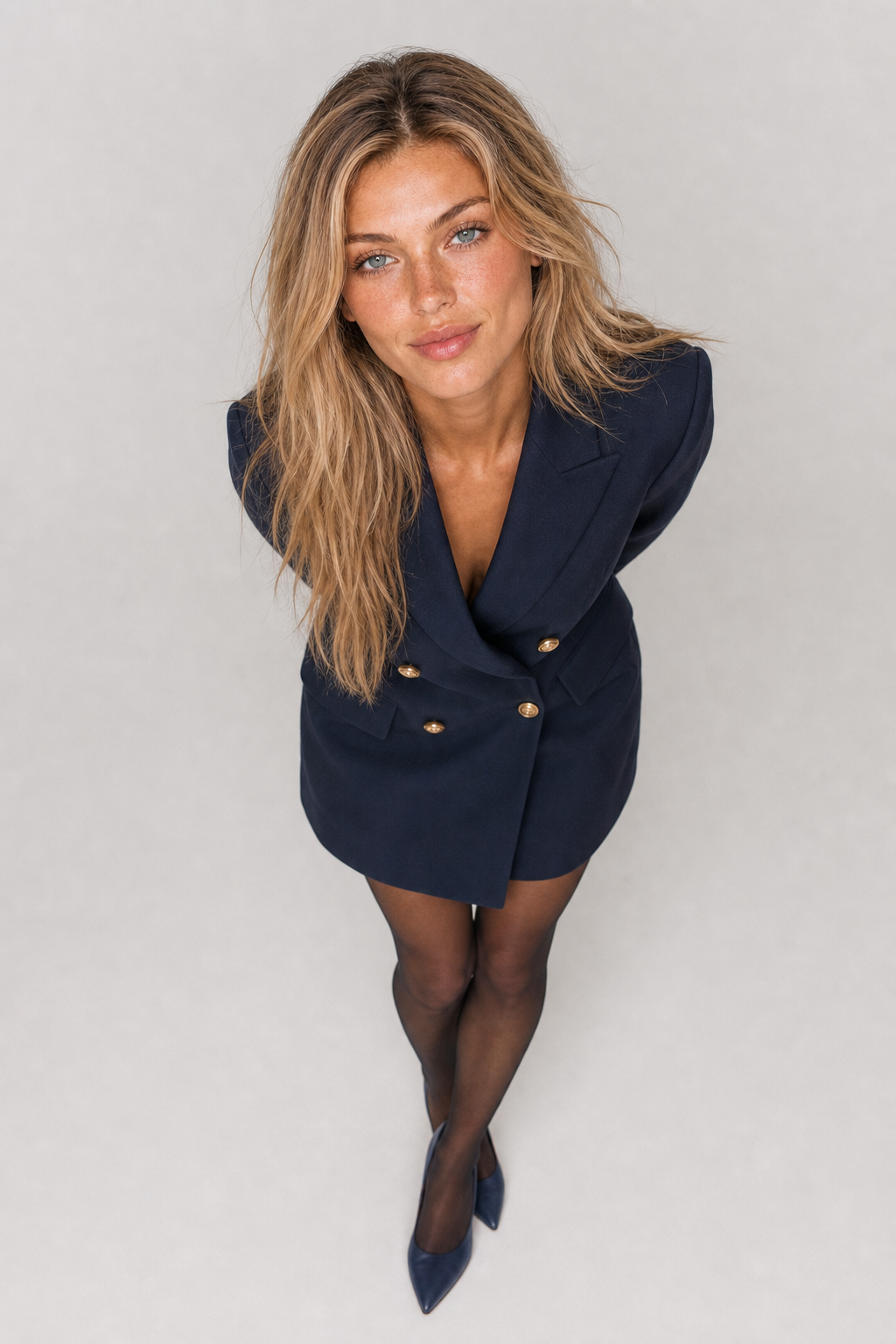
Flashlook's Approach to Authentic Inclusive Imagery
At Flashlook, we believe the human element in fashion imagery must remain authentic. Our platform is designed to provide high-fidelity, [plus size ecommerce product photos] that accurately represent your brand's garments on diverse body types.
Ensuring Fit Fidelity and Authenticity
Inclusive imagery only converts if the fit fidelity is impeccable across different bodies. A garment generated onto a plus-size model must look exactly how that garment actually fits a plus-size body-with the correct tension at the bust, ease at the hips, and appropriate hemline behavior. Generic AI often stretches or squeezes garments to fit a model, rather than reflecting true garment behavior.
Flashlook leverages advanced AI to ensure this fit fidelity. Our process treats AI as a sophisticated staging tool that respects your brand's real fit data, rather than an independent creative tool that invents fit. This is the critical difference between inclusive imagery that drives sales and imagery that leads to disappointment and returns when the physical garment doesn't match the rendered fit.
Beyond Size: A Fuller Picture of Diversity
While body size is a primary axis of inclusivity, it's not the only one. Skin tone, age, ability, gender presentation, and body shape beyond general size are equally important and equally underserved by traditional production budgets. The same AI workflow that solves the per-size production problem can address these other dimensions of diversity too.
Flashlook allows brands to build a comprehensive, inclusive cross-section of models across their catalog. For example, every PDP could feature imagery on three body types, two skin tones, and two age cohorts. This consistent, visible inclusivity resonates deeply with shoppers, building genuine connection and trust that goes far beyond marketing copy.
The Business Impact: Conversion and Returns
Research consistently shows that perceived body-size similarity between a shopper and a model significantly reduces concerns about garment fit, directly supporting purchase decisions. When shoppers see themselves represented, they are more confident in their choices, leading to higher conversion rates and fewer returns.
- Increased Conversion: Inclusive ad creatives typically outperform single-archetype ads, especially in size segments outside the sample size. Shoppers who see themselves in an ad are more likely to click and convert.
- Reduced Returns: By accurately depicting how garments fit on various body types, AI-generated imagery minimizes the gap between customer expectation and product reality, leading to fewer post-purchase returns due to fit issues.
- Faster A/B Testing: AI enables brands to quickly test inclusive variants. Imagine running the same garment with the same offer and headline against five different body-type creatives in a Meta split test. The data arrives in days, allowing for rapid learning and optimization that traditional production speeds could never deliver.

Integrating AI into Your Workflow
While AI is revolutionizing catalog production, it doesn't replace every traditional photoshoot. Hero campaigns, major collaboration launches, and brand-defining editorials still benefit from real production value. AI steps in to handle the vast, recurring volume of catalog imagery, freeing brands to invest their resources where it truly counts for high-impact brand storytelling.
Flashlook provides an intuitive workflow to generate [plus size on-model photography] and other diverse imagery:
- Prepare Your Product Photo: Start with a sharp, evenly lit front or flat-lay photo of your garment. Flashlook's AI can work wonders from a single input.
- Define Your Model Archetypes: Select the body types, skin tones, ages, and other characteristics that represent your customer base. You can lock these identities for consistency across your entire collection. Explore Our models to see the diverse range available.
- Generate Images: Upload your garment photo, select your chosen models, and let Flashlook's AI generate stunning, realistic on-model images.
- Review and Publish: Check the generated images for fit fidelity and overall quality. Flashlook ensures the garment's color, print, seams, and fastenings remain accurate. Then, publish your new, inclusive imagery across all your platforms.
This streamlined process allows brands to create high-quality, diverse imagery at scale, without the traditional operational headaches. Curious about the cost? Visit our Pricing page to learn more.

The Future of Fashion Photography is Inclusive
The era of relying solely on sample-size models is fading. With Flashlook's AI-powered platform, fashion brands can now deliver truly size-inclusive fashion photos that resonate with every customer, fostering connection, confidence, and ultimately, driving stronger business results. By embracing [inclusive sizing imagery], brands not only meet market demand but also build a more authentic and representative fashion landscape for everyone.
Frequently Asked Questions
Q: What is the difference between plus-size and size-inclusive photography?
A: Plus-size photography specifically focuses on showcasing clothing on models who wear larger clothing sizes. Size-inclusive photography, on the other hand, encompasses a broader spectrum, featuring models across a wide range of body sizes and proportions, including slim, mid-size, and fuller-figure bodies, to represent a brand's entire size offering.
Q: Can Flashlook create AI plus-size model photos from just one product image?
A: Yes, absolutely. Flashlook's advanced AI can generate high-quality, realistic on-model images for various body types, including plus-size, from a single, clear front or flat-lay photo of your garment. This significantly reduces production costs and time.
Q: How many model body types should a product gallery include for optimal inclusivity?
A: There's no single fixed number, as it depends on your brand's specific size range and customer demographics. A good starting point is to include body types that are currently underrepresented in your gallery. Aim to provide enough variation so that customers can find a model that serves as a useful reference for how the garment might look and fit on them.
Q: Can AI fashion model images predict fit or replace a size chart?
A: No, AI fashion model images provide a visual interpretation of how a garment looks on different body types. They are not a substitute for verified fit information, specific measurements, fabric details, or a comprehensive size chart. Always provide actual product measurements and sizing guides alongside AI-generated images to help shoppers make informed decisions.
Q: Where can I use size-inclusive fashion photos generated by Flashlook?
A: You can use these photos across all your digital channels: product galleries on your e-commerce site, digital lookbooks, social media campaigns, email marketing, and online advertisements. For the best shopping experience, group images of the same style on different body types together, allowing customers to easily compare how a garment looks across various figures.
Q: How does Flashlook ensure the authenticity of plus-size models generated by AI?
A: Flashlook utilizes fashion-trained AI specifically designed with diverse body data and an understanding of garment physics. This ensures that generated plus-size models have accurate body geometry and proportions, and that the garment drapes and fits realistically, avoiding the caricatured or inaccurate representations often seen with generic AI tools. The goal is authentic representation that resonates with shoppers.
Consistent AI fashion models for catalog and UGC. Open Studio · Browse AI Fashion models